One flow from search to receipt.
A rider compares options, selects pickup and dropoff points, books a trip or joins a road trip, pays, and keeps receipts and trip history. Crew and admin teams review the records that need approval.
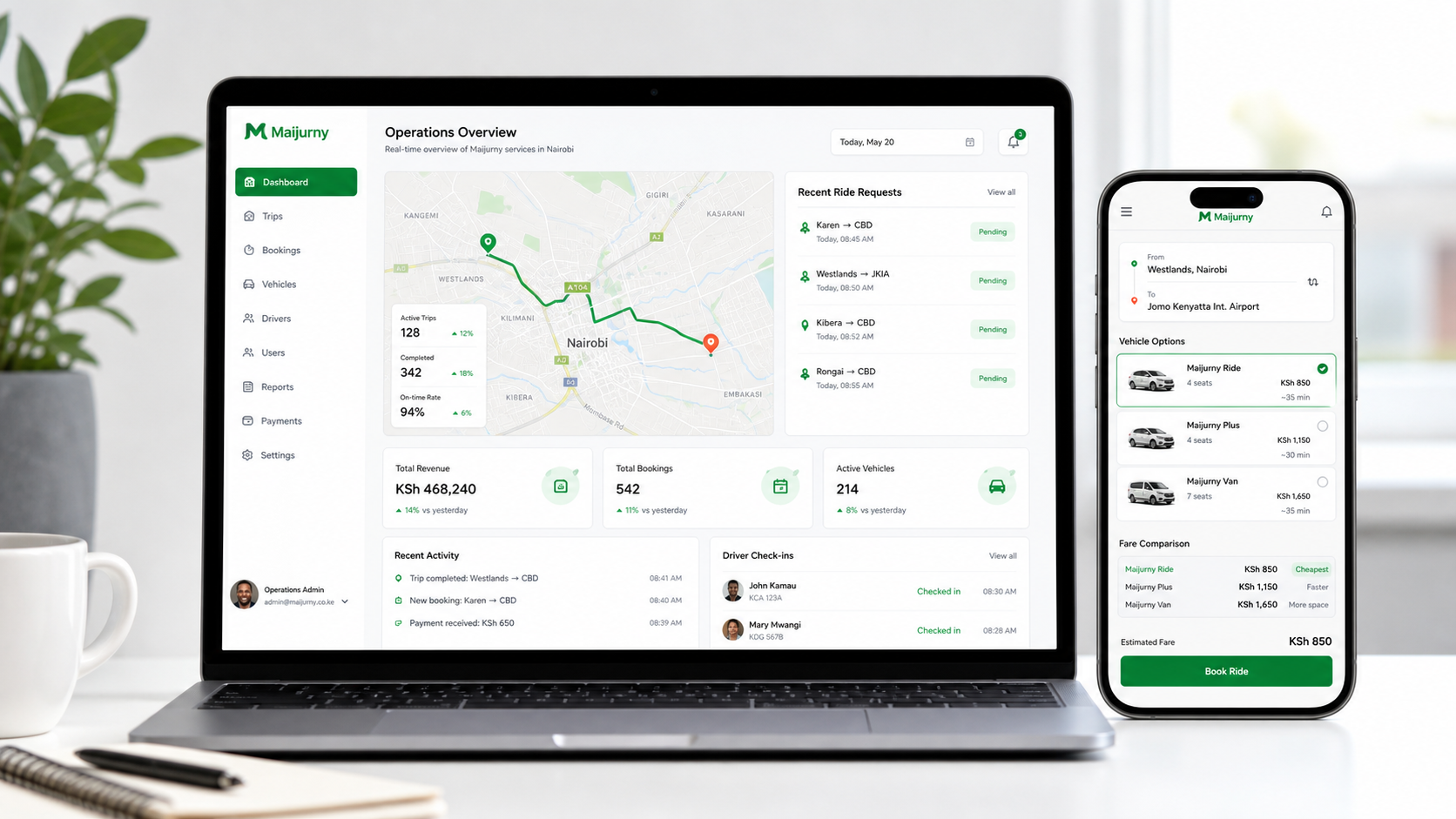
Kenya public and private transport
Compare public vehicles and private rides, plan around stages and events, book with clearer records, and keep receipts available for riders, crews, owners, and support.
Platform status
Public pages check the catalog and health endpoints at https://maijurny-i3vc.onrender.com/api/v1. When the API is unavailable, the interface keeps honest fallback content instead of hiding the state.
Platform coverage
Each surface maps to a specific transport task: compare, book, pay, verify, review, or resolve.
A rider compares options, selects pickup and dropoff points, books a trip or joins a road trip, pays, and keeps receipts and trip history. Crew and admin teams review the records that need approval.
Riders can compare public vehicles and private rides, view route and stage information, join road trips, find events on the map, pay, and receive receipts.
Road trip and event tools help users discover trips, understand locations, coordinate attendance, and keep transport activity tied to payment and receipt records.
Vehicle and nganya profiles can hold route details, uploaded images, music context, crew-safe notes, and community content that admins review before publishing.
Drivers and conductors manage route activity, passenger movement, private ride requests, receipts, trip status, and account verification through role-specific tools.
Admins approve jobs, review documents, check uploaded vehicle images, moderate nganya content, handle reports, and keep an activity log.
Payment and receipt views help riders, crews, and support teams verify what happened before, during, and after a booking.
Account details, location use, documents, images, payment records, and admin review actions should be handled with clear policies and role-based access.
Journey workflow
Maijurny connects rider planning, crew activity, vehicle identity, trip records, payments, jobs, and moderation into one practical operating surface.
Compare stage, fare, vehicle, private ride, event, and road-trip details before committing.
Track booking status, pickup and dropoff context, crew activity, payments, and receipts.
Use history, account records, documents, and admin review trails when something needs follow-up.
Operating pillars
The product surface follows how people actually move: planning with incomplete context, traveling with money and timing on the line, and resolving issues later.
Compare public routes, private options, fares, stages, route context, and booking availability before the trip starts.
Keep ride history, receipts, subscription records, driver activity, and trip status clear for riders, crews, and owners.
Review documents, vehicle images, jobs, culture content, payouts, and portal access before trust-sensitive actions go live.
User tools
From finding a stage to reviewing receipts and subscriptions, Maijurny keeps mobility choices practical and traceable.
Live catalog
When the backend is running, this list comes from the catalog endpoint. When it is not, the page keeps the same product map with local fallback data.
Executive monitoring, verification, revenue, trips, growth, and operations.
Ride requests, payments, history, stages, and savings.
Public route duty, private ride requests, earnings, and vehicle status.
Passenger manifests, payment verification, and reports.
Fleet, revenue, routes, drivers, and operating analytics.
Vehicle performance, earnings, and trip analytics.
Applications, status, alerts, and earnings.